Things to Do in Sukhothai: Historical Park, Museums, and Si Satchanalai
Book an experience
Things to do here
The top-rated tours and activities here — all with instant confirmation and free cancellation on most bookings.
Sukhothai Historical Park
The core reason to visit Sukhothai. The UNESCO-listed historical park preserves the ruins of the first Thai capital, founded in 1238 CE and at its height in the 13th–14th centuries. The park is divided into three zones (central, north, west), with the central zone containing the highest concentration of major monuments.
Entry: ฿100 per zone. A combined pass covering all three zones costs ฿350. Bicycle hire at the park entrance: ฿30–50/day.
Opening hours: 6am–6pm (grounds); some monuments close earlier or have specific hours for inner sanctuaries.
Best time to visit: Dawn and early morning. The light is soft, temperatures are cool, and the park is empty before tour groups arrive around 9am. The combination of mist, lotus ponds, and ancient architecture at 6:30am is genuinely atmospheric.
Central zone monuments
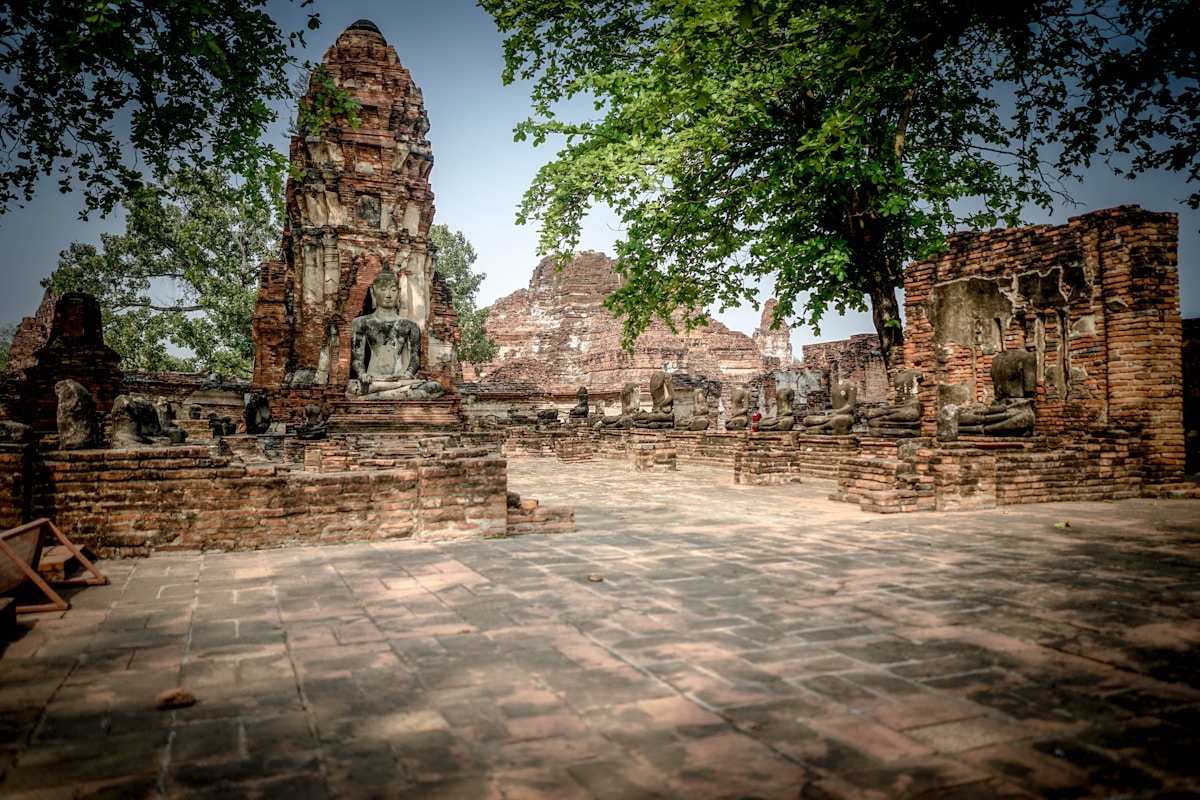
Wat Mahathat — The largest and most important temple in the park. A central lotus-bud chedi surrounded by satellite chedis, columns, and two massive standing Buddha images. The lotus-bud chedi form seen here is the defining image of Sukhothai-era architecture — it influenced temple design across the region and is the style most associated with the period. The scale and spatial composition make it the visual centrepiece of the park.
Wat Si Sawai — A Khmer-style prang complex that predates the Thai kingdom — originally a Hindu temple incorporated into the Buddhist city. The three prangs surrounded by a moat show the Hindu religious foundation that underlies northern Thai Buddhism. The architectural contrast with Wat Mahathat (nearby) demonstrates the cultural synthesis of the Sukhothai period.
Wat Sa Si — A temple on an island in an artificial lake, reached by a footbridge. The best reflections in the park — dawn visits produce clear mirror images in the still water. One of the most photogenic locations in the historical park and less visited than Wat Mahathat.
Wat Trapang Ngoen — A lake temple less visited than Wat Sa Si, with a large standing Buddha image. The relative isolation makes it pleasant for quiet contemplation.
Wat Sorasak — Notable for the elephant sculptures around the base of its chedi — 24 elephant heads emerging from the base, a design seen also at Wat Chang Lom in Si Satchanalai. Smaller and quicker to visit than the main monuments.
Northern and western zones
The northern and western zones require separate entry (฿100 each) and cycling time — each is 2–4km from the central zone.
Wat Phra Phai Luang (north zone) — A partially excavated complex with three prangs and various Buddha images. The forest has partly reclaimed sections, giving a more romantic, less restored quality than the central zone.
Wat Sri Chum (north zone) — A massive walled mondop (square sanctuary) containing one of the most remarkable Buddha images in Thailand: a seated Phra Attharos with hands on knees, face visible through a narrow slit in the enclosure walls. The image’s face, 11 metres wide, is visible from outside through the narrow opening — an intentional architectural effect. A hidden passage inside the wall once allowed monks to appear miraculously above the Buddha’s head.
Wat Saphan Hin (west zone) — A hilltop temple reached by a 200-metre stone path. The standing Buddha image looks over the plain below. The walk up requires 20 minutes; the view across the park is the best available.
Ramkhamhaeng National Museum
Adjacent to the central zone entrance. The museum covers the history of the Sukhothai kingdom, the development of the Thai script under King Ramkhamhaeng (an inscription from 1283 CE is on display — the oldest known example of Thai writing), and the artistic achievements of the period.
Entry: ฿150. Open Wednesday–Sunday, 9am–4pm. Allow 1–1.5 hours.
The museum provides necessary context before cycling the park — the relationship between the monuments makes more sense having seen the historical timeline and artistic development explained.
Si Satchanalai Historical Park
50km north of Sukhothai on the banks of the Wang River. A second World Heritage park, less visited than Sukhothai, where the forest has reclaimed more of the ruins. The atmosphere is more overgrown and exploratory than the manicured central Sukhothai park.
Key monuments: Wat Chang Lom (elephant-base chedi, better preserved than Sukhothai’s equivalent), Wat Chedi Jet Thaew (a row of seven chedis in various styles), Wat Nang Phaya (well-preserved stucco reliefs).
Sawankhalok Kilns: 2km east at Chaliang, the kilns that produced the Sawankhalok ceramics traded across Southeast Asia from the 13th–15th centuries. The Sawankhalok Kiln Preservation Centre has excavated kilns visible under shelters and a ceramic collection.
Getting there: Local bus from Sukhothai Bus Terminal (฿40, 1 hour) or motorbike hire (฿200/day). Entry: ฿100.
Cycling the park
The central zone covers 4 square kilometres — manageable in 3–4 hours by bicycle. The main monuments are connected by paths and paved roads; no off-road cycling required. Flat terrain throughout. The northern and western zones require separate entry and add 2–3 hours of cycling each.
Bicycle hire is available at the central zone entrance (฿30–50/day) and from several guesthouses near the park. Electric bikes are available from some rental shops (฿150/day) — useful in the heat of high season (March–April).
Loy Krathong at Sukhothai
The November full moon festival originated in Sukhothai and is celebrated here more dramatically than anywhere else in Thailand. The historical park fills with thousands of lotus-shaped krathong (floating offerings) on the water, fire lanterns released into the sky, and traditional performances. The event runs for three days around the full moon.
If visiting in November, time the trip to coincide. Accommodation books out weeks in advance for the festival period.
Practical notes
- Transport in Sukhothai: The modern town (New Sukhothai) is 12km from the historical park. Songthaew from town: ฿30–40. Bicycle hire in the park is sufficient for exploration once you’ve arrived.
- Time needed: 1 full day for the central zone and museum. 2 days for all three zones plus Si Satchanalai.
- When to visit: November to February (cool dry season). March–April is very hot — the dawn start is essential, return before noon.
See also: Sukhothai travel guide for getting there and where to stay.
Frequently Asked Questions
- How much does it cost to enter Sukhothai Historical Park?
- ฿100 per zone (central, northern, western). A combined pass for all three zones: ฿350. Bicycle hire at the entrance: ฿30–50/day. The Ramkhamhaeng National Museum adjacent to the park costs ฿150 separately. Open 6am–6pm; arriving at dawn avoids tour groups and gives the best light.
- Is Si Satchanalai worth visiting from Sukhothai?
- Yes, if you have a second day. The ruins 50km north are less restored and less visited than the main Sukhothai park — the forest has partly reclaimed sections, giving a more atmospheric feel. The Sawankhalok kilns at Chaliang (2km from the park) add historical context. Get there by local bus (฿40, 1 hour) or motorbike hire (฿200/day).
Ready to explore?
Browse hundreds of tours and activities. Book securely with free cancellation on most options.
Browse on GetYourGuide →We may earn a small commission — at no extra cost to you.